
The web does not need another paid article
Most link campaigns begin with the wrong inventory. They start with a list of websites willing to sell space and work backwards to an article. The publisher earns a fee, the buyer gets a link, and the reader usually gets a page nobody would have created for them.
Ethical link building starts with a public problem. What information is difficult to find, compare or understand? What could your business research, organise, calculate or explain better than anyone else? The link is then a natural citation to useful work, not the product being purchased.
A law firm turned official data into a public resource
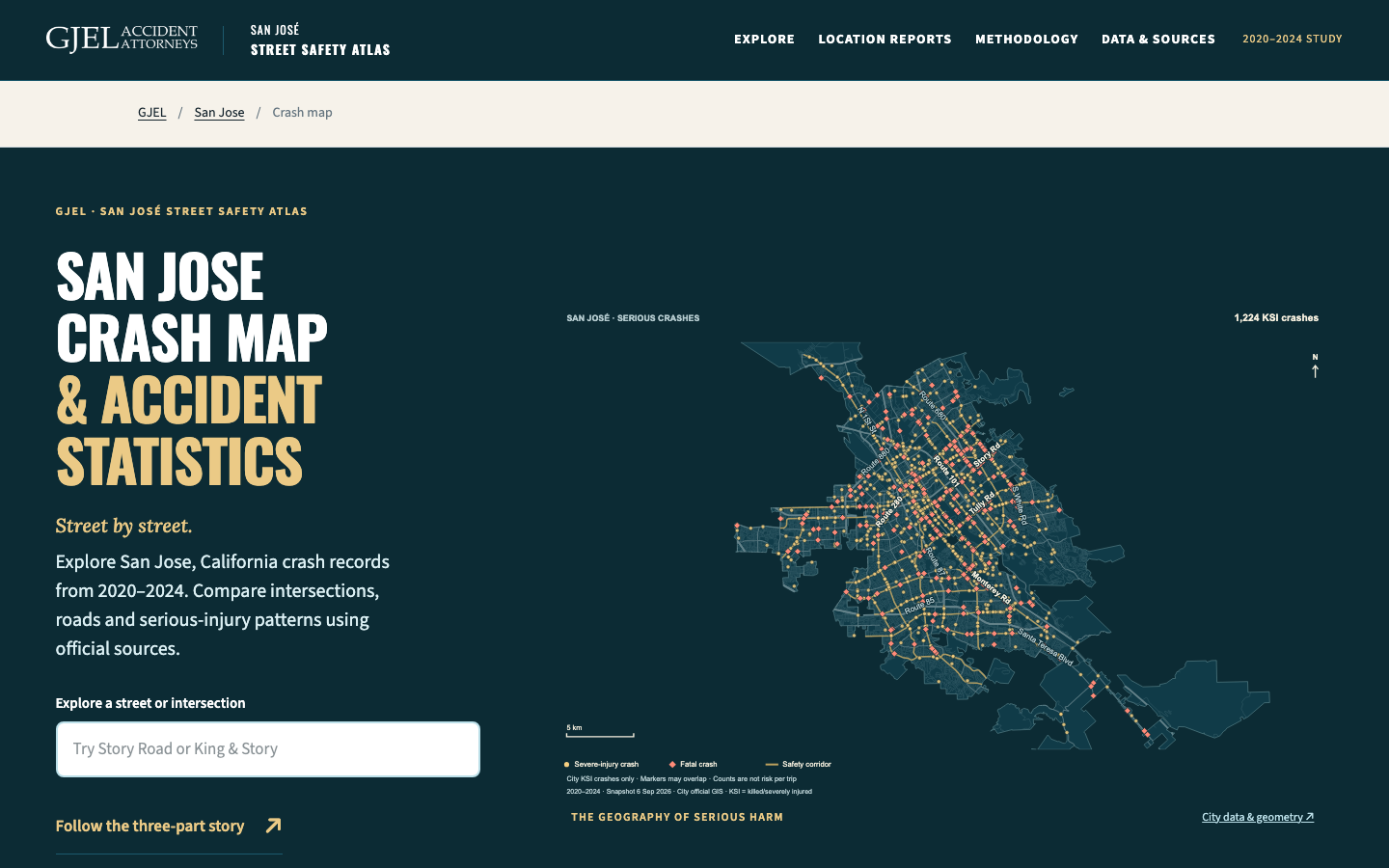
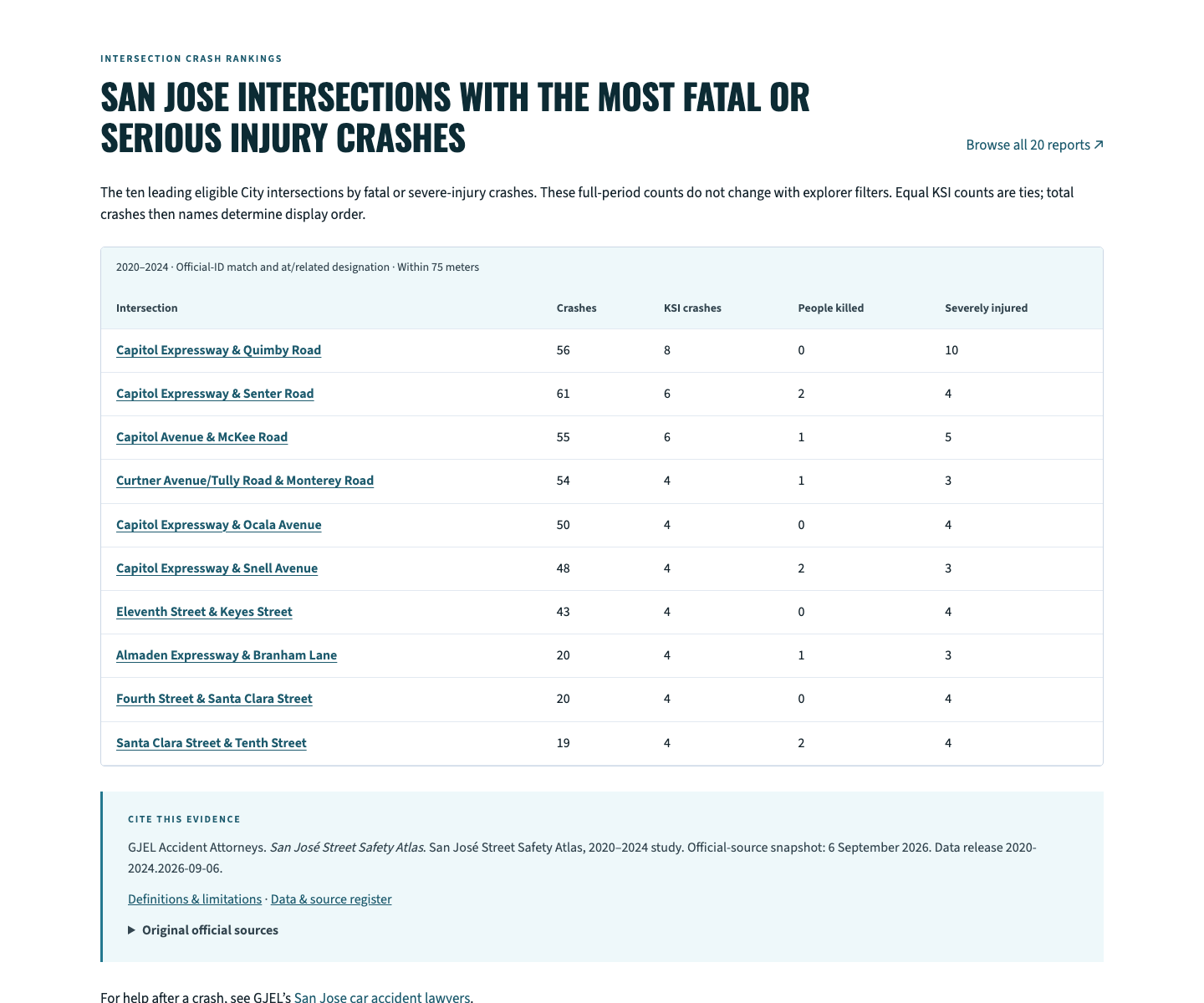
GJEL Accident Attorneys built a San Jose Crash Map from official 2020 to 2024 collision records. It gives residents an interactive explorer, 20 local reports, ranked intersections, downloadable evidence, sources, limitations, a methodology and a corrections process.
The atlas documents 24,133 reported crashes, including 1,224 involving fatality or severe injury. More importantly, it lets readers inspect where the numbers came from and what the analysis cannot prove. That transparency turns a marketing project into a credible source.
- The public gets a usable safety resource.
- Journalists get findings, tables and citation instructions.
- The firm demonstrates expertise without making the page a sales pitch.
- Future editions can update and compound the original work.
A different asset helps at the moment of a decision
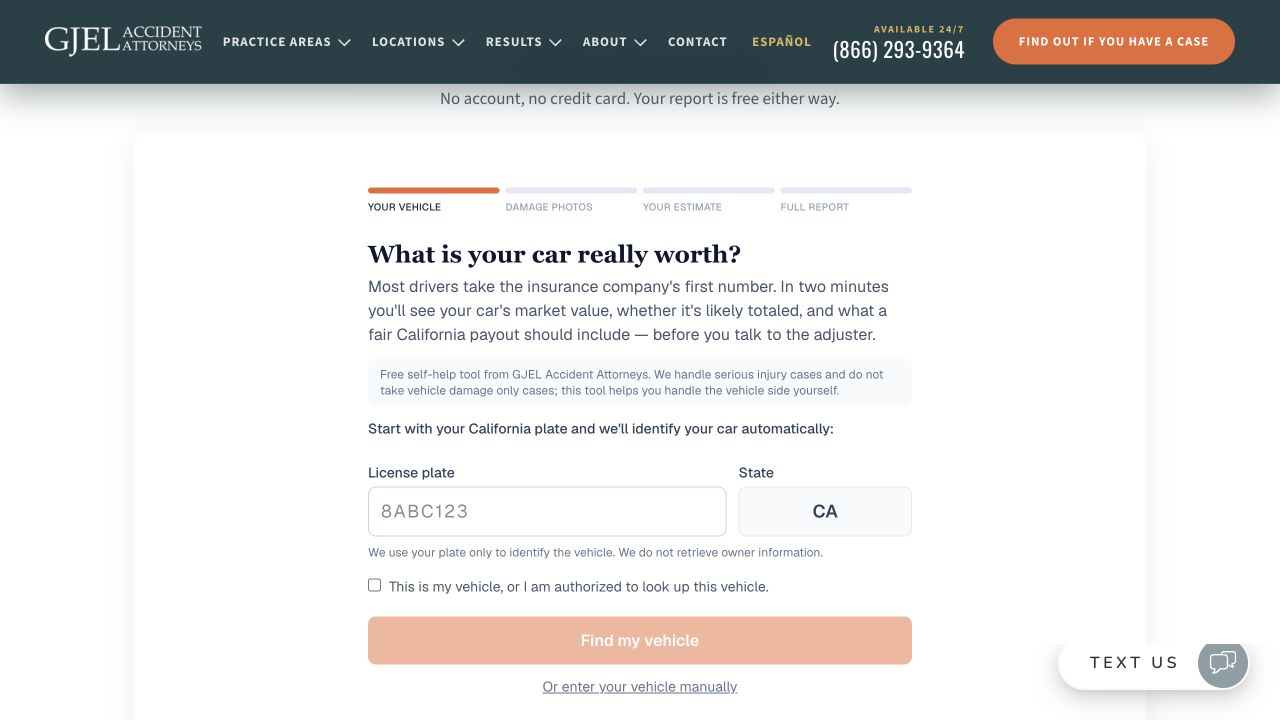
GJEL also built a California total-loss calculator for drivers trying to understand a damaged car's value. The public entry screen starts with a California plate or manual vehicle details. The page describes later steps for mileage, location and damage photos, plus a separate review of an insurer's valuation report. GJEL calls the result an informational estimate and says it does not take vehicle-damage-only cases. We inspected the entry flow, not a finished estimate or its accuracy.
This is a different kind of public resource from the crash map. The map helps people explore a community problem; the calculator helps one person make sense of a specific decision. A useful tool can give a consumer writer a practical story to explain, even when many users will never become clients.
For an Irish small business, copy the method, not the California insurance rules. A builder could offer a carefully sourced retrofit-planning worksheet; a retailer could help customers compare repair and replacement choices; a local service business could publish a dated cost or eligibility guide. Start with a recurring customer question, make the answer inspectable, and state clearly what the resource cannot decide.
Then pitch the resource to people whose readers face that exact question. A local journalist may want the consumer decision; a trade publication may care about the inputs and methodology; a community organisation may value a usable guide. Record their feedback, correct weak spots and update the resource when the underlying facts change. The second useful edition can be more newsworthy than another request for a link.
Seven Irish asset ideas worth building
The same principle works far beyond road safety. Choose an issue where public information exists but is scattered, difficult to read or missing local context.
- A town-centre accessibility map covering entrances, toilets, parking and public transport.
- A planning-permission explorer that makes local authority records easier for residents to follow.
- A live directory of grants, eligibility rules, deadlines and official application links for Irish SMEs.
- A court and public-service access guide with verified contacts, opening hours and interpreter information.
- A county-by-county comparison of published waiting times or service availability.
- A plain-English guide to requesting records from public bodies, with the correct official forms.
- An annual local business survey that publishes the questions, sample and anonymised results.
The useful-without-Google test
Ask whether somebody would still use the asset if search rankings did not exist. Would a journalist cite it? Would a local group share it? Would a librarian or adviser keep it on hand? Would a customer use it without filling in a lead form?
If the answer is no, the idea may be content dressed up as a tool. If the answer is yes, you have the beginning of something worth owning.
Make the evidence as good as the design
A beautiful dashboard built on unexplained data is not a trustworthy asset. Publish the original sources, access dates, definitions, inclusion rules, known gaps, update schedule and a visible way to submit corrections. Use personal data only when you have a lawful basis and a real need. Aggregate or anonymise wherever possible.
Promotion becomes genuinely helpful
Asset-led outreach does not say, ‘Please link to our blog.’ It says, ‘We organised this official information, found a local pattern relevant to your readers and made the evidence available in a form you can inspect and reuse.’
Send different recipients the finding that matters to them. A transport reporter, residents association, researcher and local councillor should not receive the same generic pitch. Give each person a direct route to the evidence, and never make a link the price of access.
Build value that remains after the campaign
At the end of a bought-link campaign, the business owns a list of placements. At the end of an asset project, it can own cleaned data, an original methodology, a useful product, press relationships, an audience and the ability to publish the next edition faster.
That is what ethical marketing should do. It should help the business grow by making something real, not by adding another disposable page to the web.